
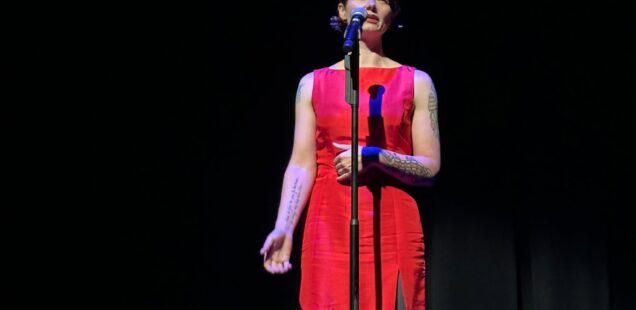
Telling the story of how I first came to Montreal
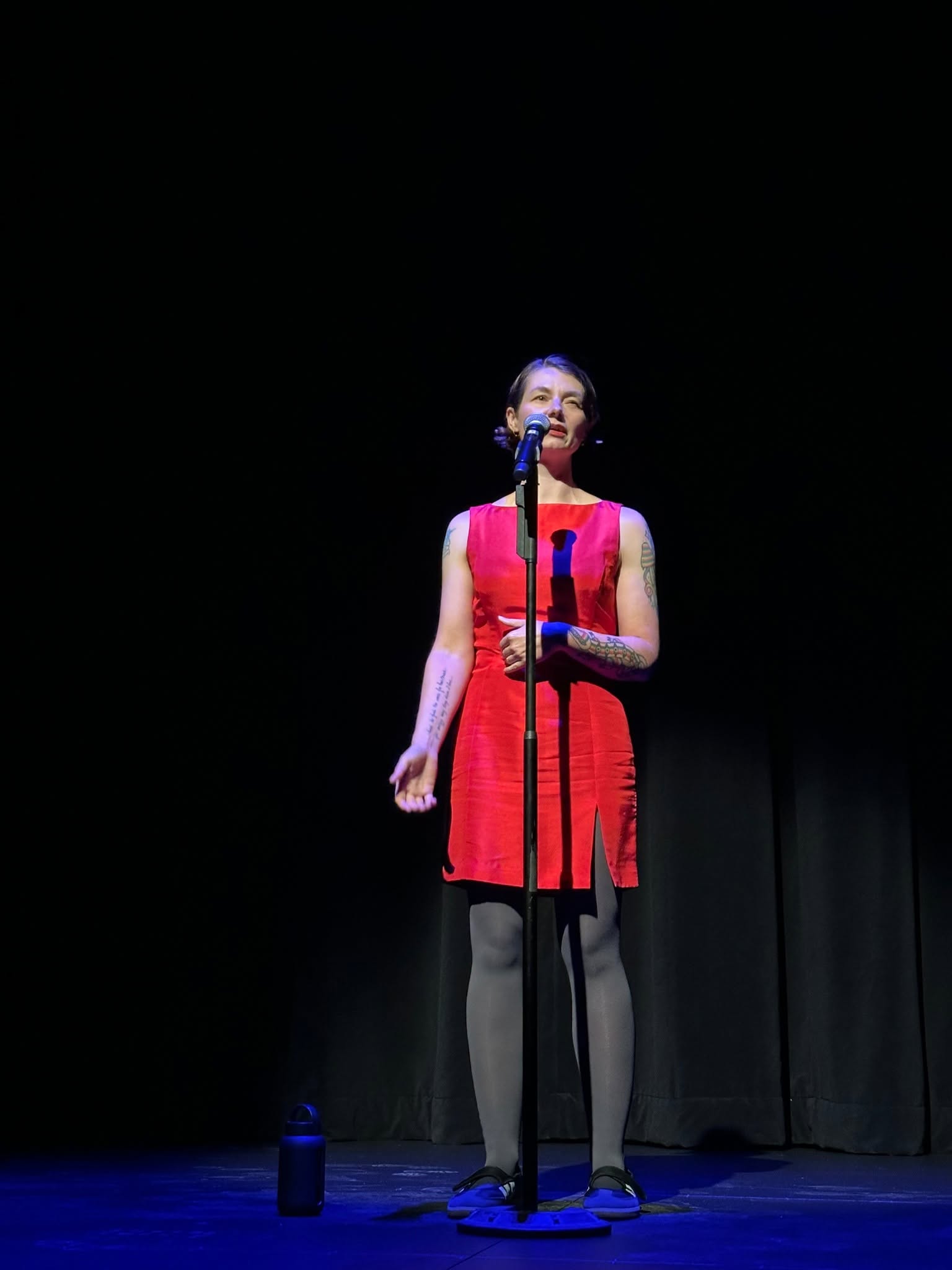
After a four year hiatus from performing, I got on stage and told the story of how I first came to Montreal.
It’s been rough creatively the past few years. I lost the joy of writing, discovering new ideas and letting myself be surprised by where they take me. I turned writing into a chore, another excuse to measure my value, another opportunity to disappoint myself. I’m not sure where or how it ran off the rails, but I was feeling like I’d never find that spark again.
June marked 20 years since I first came to Montreal on a one-way ticket. I wanted to do something to honour that decision that ended up changing my life forever. I bought a Super 8 camera with the idea of doing a nostalgia tour around the city, filming the outside of every apartment I lived in since 2006. I wasn’t sure what I’d do with it, but thought that’d be a start.
Then I saw the theme for the September edition of Confabulation, Montreal’s true life storytelling series. Bookmarked, “stories of plot twists, strong characters, and the tales that won’t let go.” The idea came immediately. I’d been inspired to come to Montreal because of a tale that wouldn’t let go. It was a blog I discovered in high school on the site LiveJournal. A woman named Amanda, about 7 or 8 years older than me, had left her home in New Jersey to do French immersion in Chicoutimi and then got accepted to UQÀM. She’d post beautiful photos of Montreal and detail the seemingly endless cultural events she attended. I discovered her blog at a pivotal time in my life when I was feeling lost and uninspired. The idea of immersing myself in a francophone oasis of art and culture, a place where no one knew me, was irresistible. I reached out to her, asked if I could stay at her place over the summer, and the rest is history.
I put a pitch together and sent it off to Confabulation. I was paired with general manager and friend Deb Vanslet. Deb took a storytelling class with me way back in 2013 and we became friends, so I was thrilled to be teamed up with her. I wrote up a first draft, struggling to find the right scenes in the mountain of memories I have from that time. I’m also taking an online memoir class and we talked about Anne Lamott’s famous essay, “Shitty First Drafts” from her book on writing, Bird by Bird. Wow was this the experience I had. But unlike the last few years where I’d start writing and immediately get frustrated, this time there was a sense of calm as I confronted the uncomfortable throat clearing that is a first draft. I was excited and had an idea for a scene in my cockroach-infested apartment in Portland. In the first draft, I opened with that scene because I was excited about it, but quickly realized that it set a super dark tone that I didn’t actually want. Deb was a great editor and left thoughtful questions in the document. I knew it was bad but instead of taking that as a sign to give up, I practiced what I’ve been preaching as a writing teacher for all these years: get the material down, take a step back and return with fresh eyes.
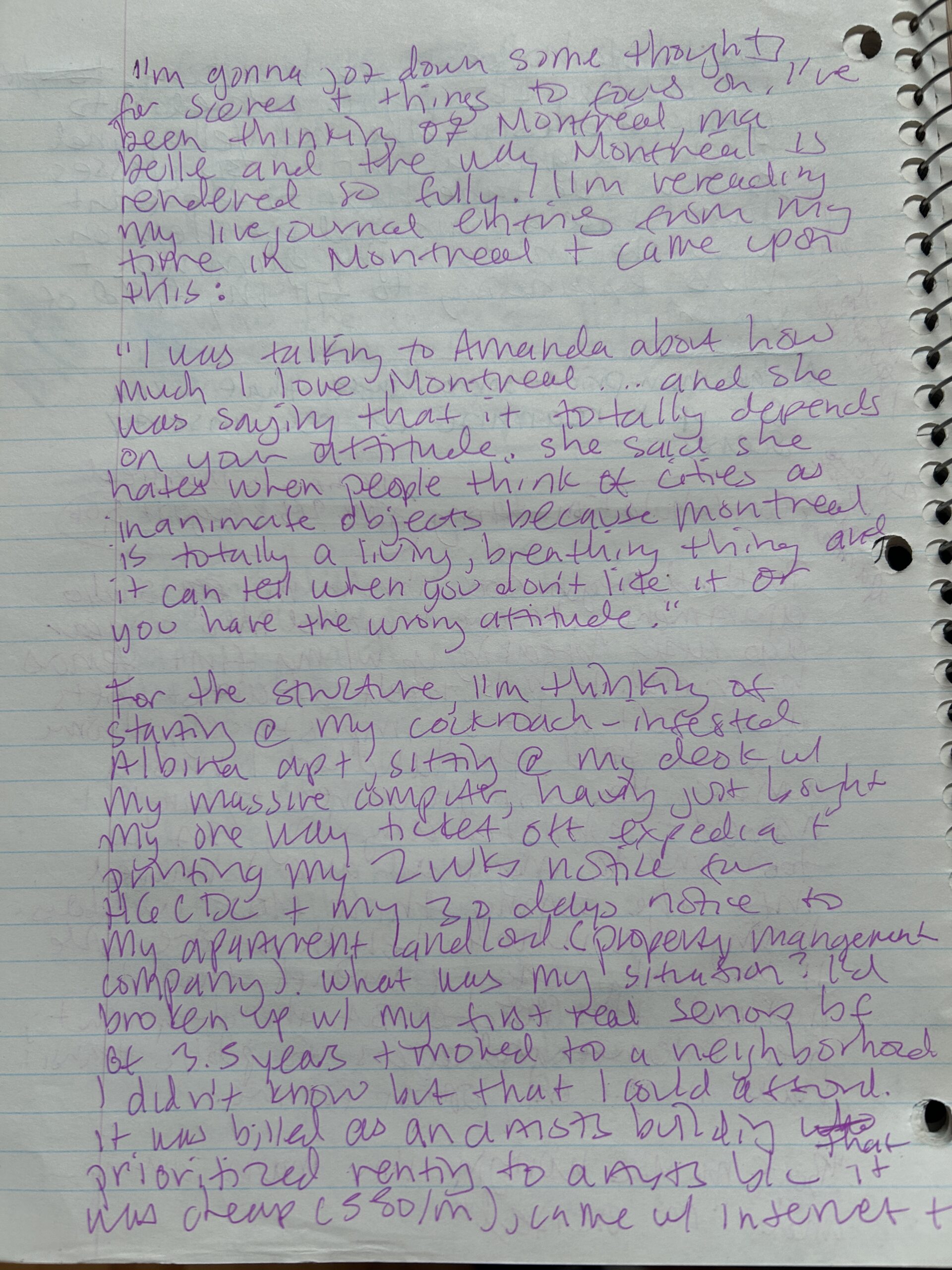
My second draft seemed to pour out of me almost effortlessly. I could see that the cockroach scene needed to move and found an opening scene that established the tone I was going for. Once that opener was in place, the path became clear. I had fallen into that familiar trap in my first draft where I was being too loyal to the facts of the story. I was including too much. When I loosened my grip and let only the most pertinent details come through, the rest flowed easily.
I trusted my tried and true process. First I wrote out everything I remembered about that time. I’m extremely fortunate that my own LiveJournal still exists and I was able to access my entries from 2004, 5 and 6, including my time in Montreal. It was surreal to visit that version of myself and see how much I’ve changed and how much has stayed the same.
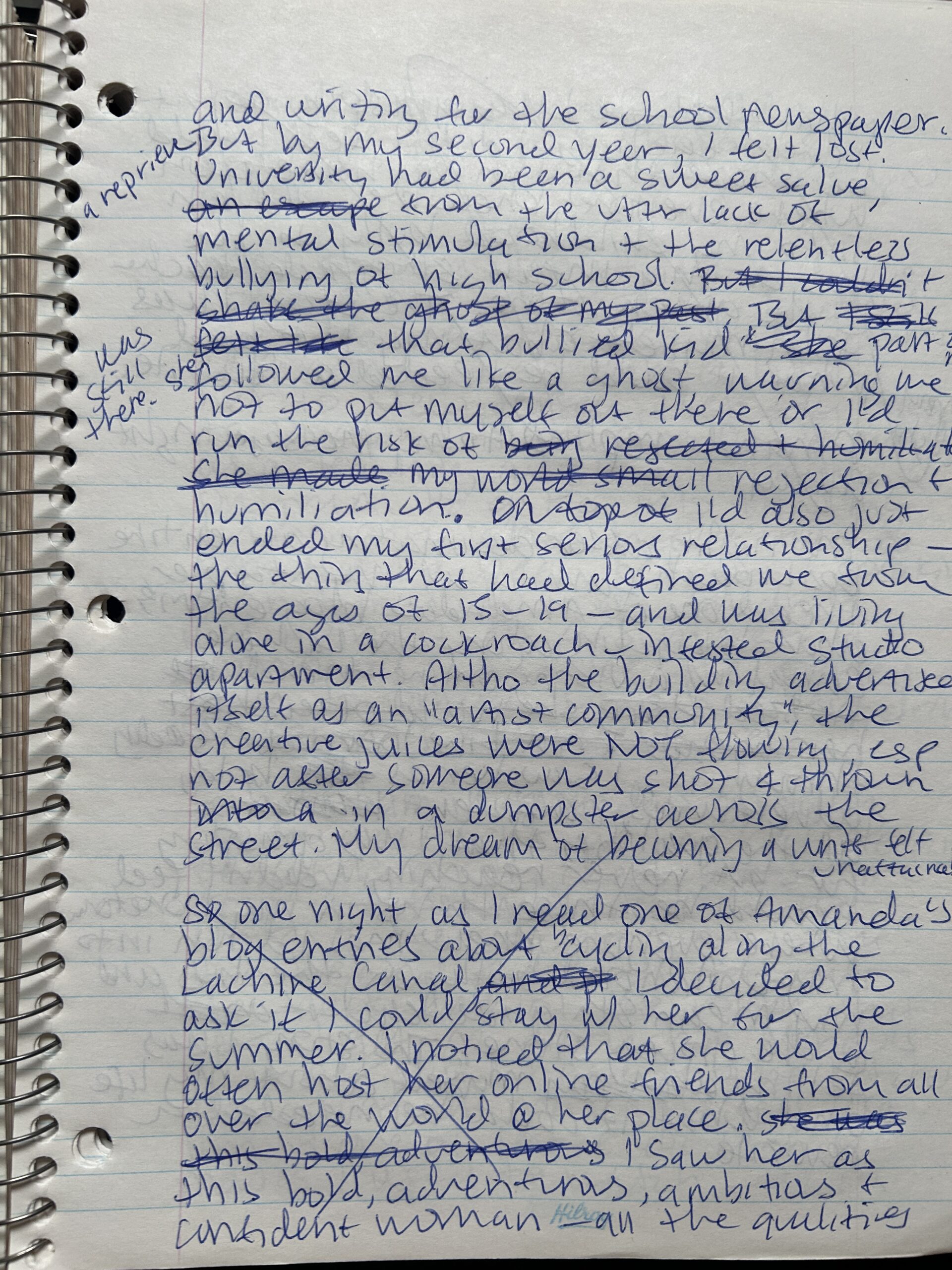
Then I started jotting down ideas for the structure and trying to write out scenes that might work. I had to conjure all the details and suss out which would be the most compelling. Once I did that, I tried writing out drafts. I’d get it all down, then revisit it and write in the margins, ask myself questions and add or remove things.
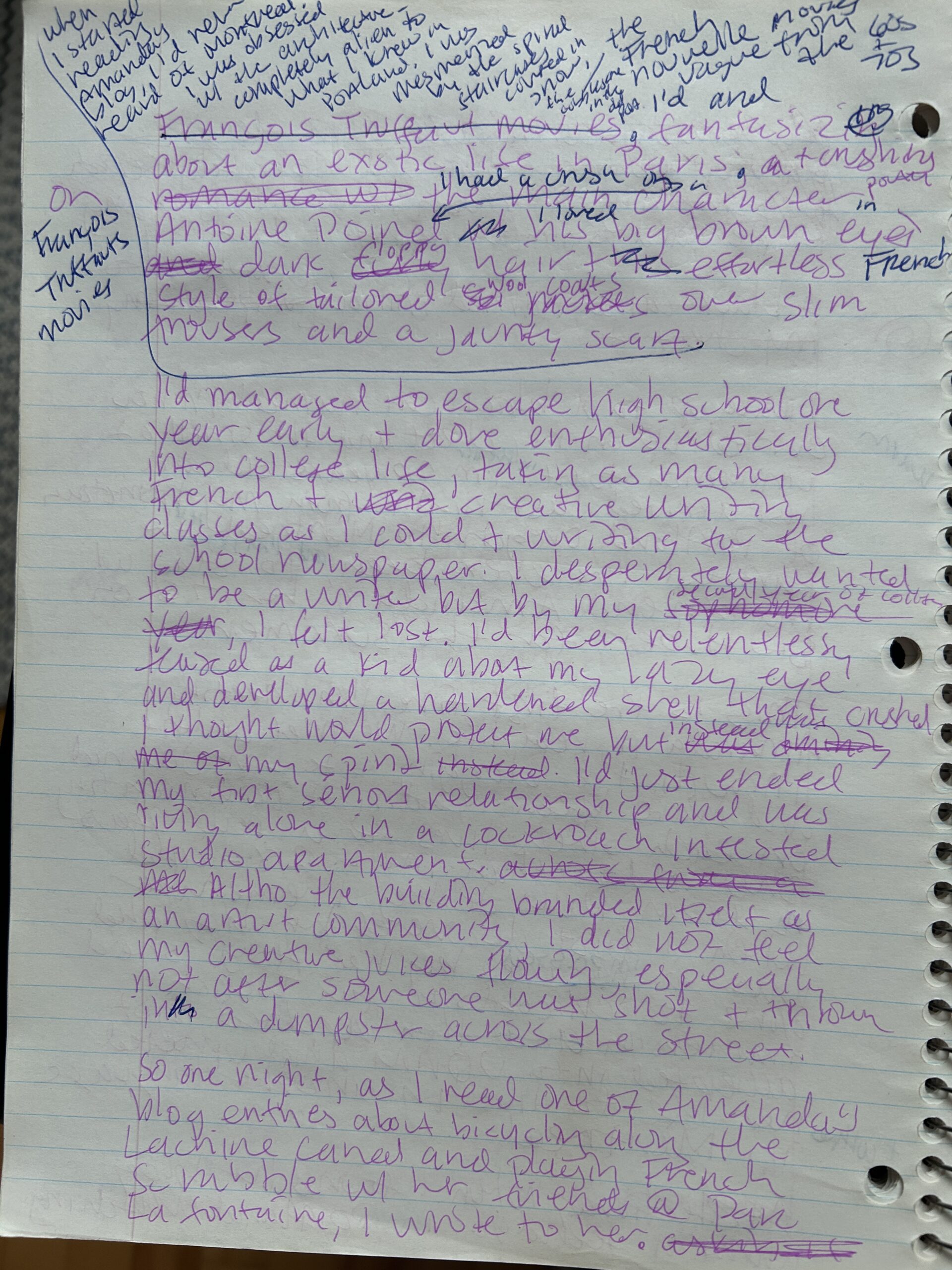
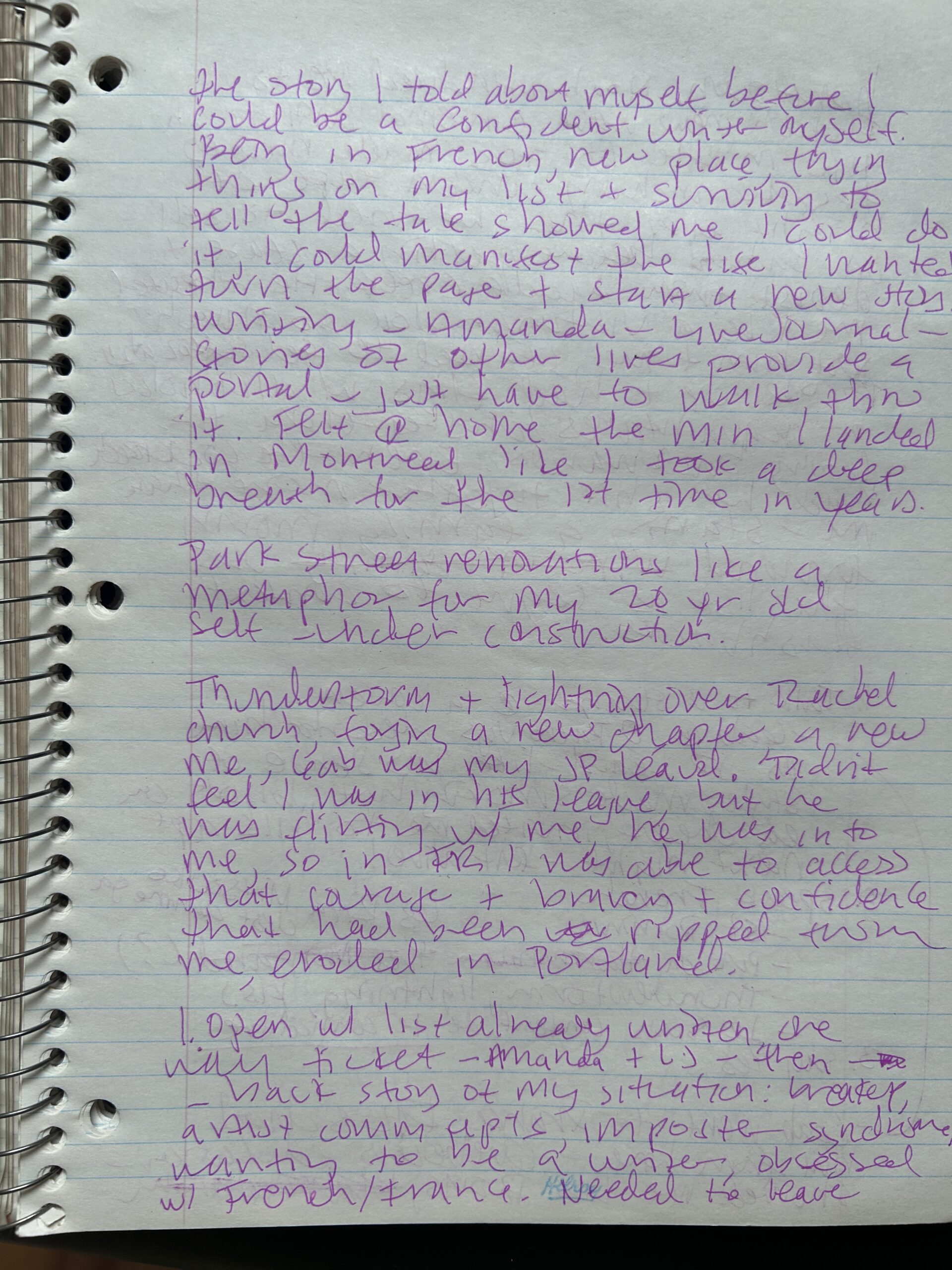
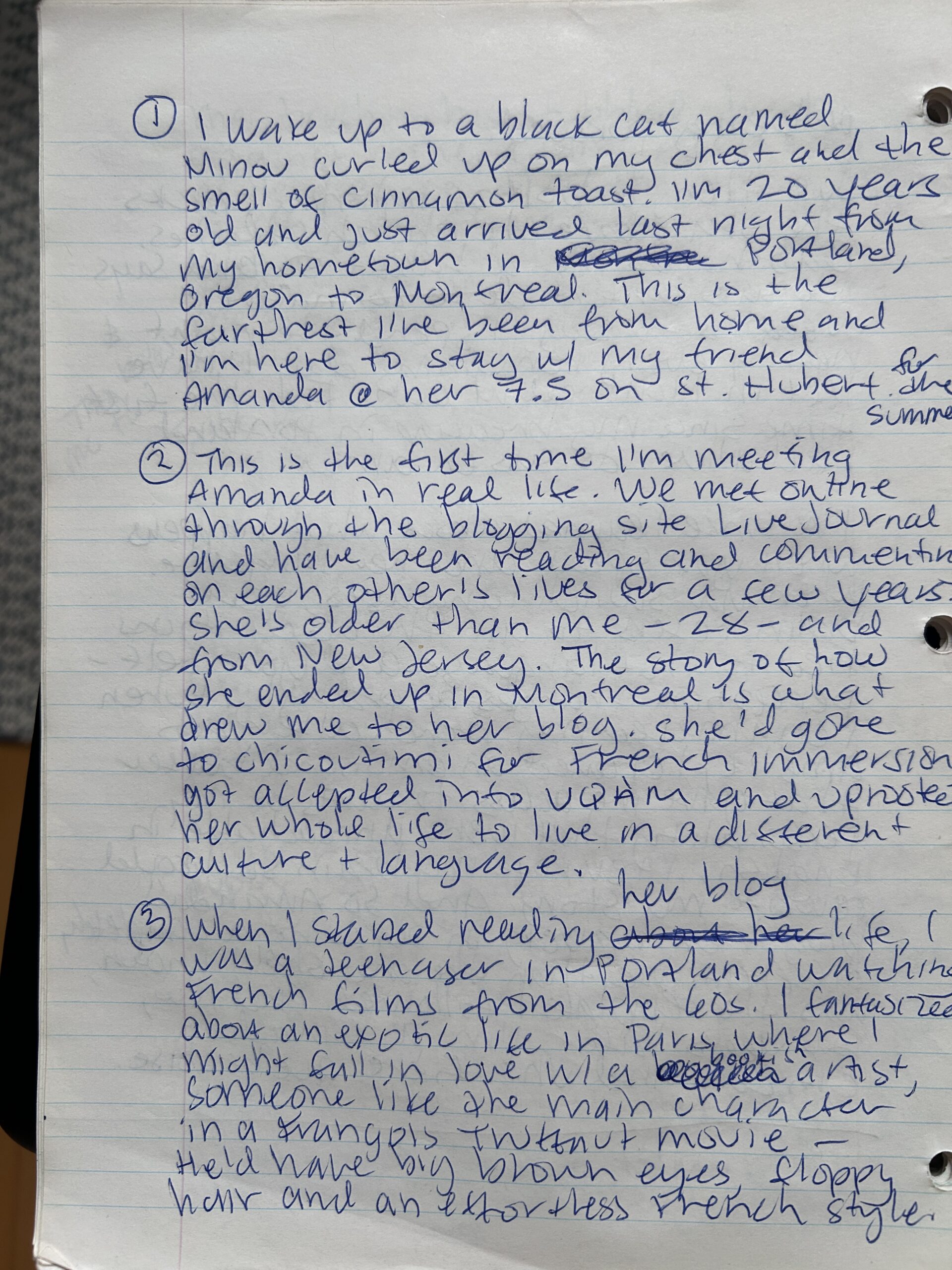
Finally when I got it into a shape I was more or less happy with, I wrote it out and broke it up into sections. This is how I practice my stories so I can confidently tell them without notes on stage. This is the version I end up rehearsing with.
I practiced telling my story while walking in Frédéric Back park. I’d usually rehearse stories standing and/or pacing in my apartment, but adding walking was a new element and it really helped imprint the story in my bones. I’d walk while telling as much as the story as I could before I needed to revisit my notes. Then I’d tackle another chunk. The idea is not to memorize every word but to see the story as building towards something and to be able to situate myself in each section. This way, if I forget a word it’s no big deal and doesn’t make me lose my place. I know where the story is going so I can improvise instead of rote memorization which takes the heart and soul out of the telling.
I was so pleased with the end result. I felt relaxed, the story came out naturally and I was able to be fully present in my telling and with the audience.
I was also inspired by the Super 8 footage I’d gathered to create a kind of teaser video to promote my performance. I discussed the concept with Mina, who happily edited together the footage and a few photos of the people and places in the story. We also used music she composed. It was such a fun collaboration and a cool way to promote a storytelling show!
The experience renewed my passion for writing and especially oral storytelling. It reminded me that I do in fact know what I’m doing and to trust my process. Not only that, to enjoy the process and let it take me where I need to go without forcing an outcome.
I discovered Confabulation shortly after I moved to Montreal. I was looking for The Moth but they didn’t have any Montreal chapter. I came across Confabulation while scouring the internet and its founder, Matt Goldberg. He was a kindred spirit, a lover of The Moth and storytelling, an improv performer and English teacher. I saw he had a 2 minute storytelling show and decided to dip my toes in.
I’d taken a storytelling class at PSU and told the story of how I got banned for life from Powell’s City of Books but that’d been the only time I’d ever performed a story. Two minutes seemed like a nice way to get in and get out and see if I really wanted to pursue this. I had a fantastic time and pitched a more ambitious story for the next show, where each performer got 10 minutes. I had no idea that the producer for one of my favourite shows, WireTap, was in the audience. She contacted me and asked if I wanted to tell my story on the show (and meet one of my heroes, Jonathan Goldstein).
My story aired in September 2011. Two months later, I published my first piece of writing on the now defunct nerve.com, “Oculus Sinister” which the editor retitled to “Love and a Lazy Eye.” The WireTap producer read it and asked if I’d want to read it on the show. That episode aired in February 2012. The momentum that began with Confabulation carried on for the next couple years. I did an artist residency at Elsewhere, a living museum in Greensboro, North Carolina, where I wrote a speculative nonfiction version of the last days of my dad’s life before he drowned in the Colorado river. It’s some of the writing I’m still most proud of.
While I was doing the residency, I got an email from the producer of The Moth inviting me to tell a story on the MainStage in Denver, Colorado. The timing was uncanny. The show would be in my dad’s hometown, not far from where he drowned, two days after what would have been his 61st birthday. It was the greatest professional achievement of my life, a true dream come true, and so healing and special to be able to share that story in Denver. I wouldn’t have been able to tell it as well as I did without my time on Confabulation. I would go on to become a producer on the show, helping other storytellers prepare to share a true life story on stage. I also helped develop the Confab Storylab, a storytelling workshop drawn from the syllabus I created for my own storytelling courses for the Blue Metropolis Foundation and Quebec Writers’ Federation.
Telling the story of how I came to Montreal after such a long time away from the stage and doing it on the show that ended up changing my life as a writer was so profoundly satisfying. I got to honour the 20 year old who took a risk and moved across the continent to discover herself and build an exciting life. I also got to honour the storytelling community that helped me find my voice.
Recent Comments